For many homeowners in the UK, hiring a tree surgeon (or arborist) can feel like a mystery. You see the high-vis jackets, the climbing ropes, and the woodchippers, but what exactly is going on behind the scenes?
Understanding what happens during a professional tree surgery visit can help you prepare your property and ensure you are getting the highest standard of care for your trees. Here is a step-by-step breakdown of what to expect from start to finish.
1. The Pre-Work Safety Briefing
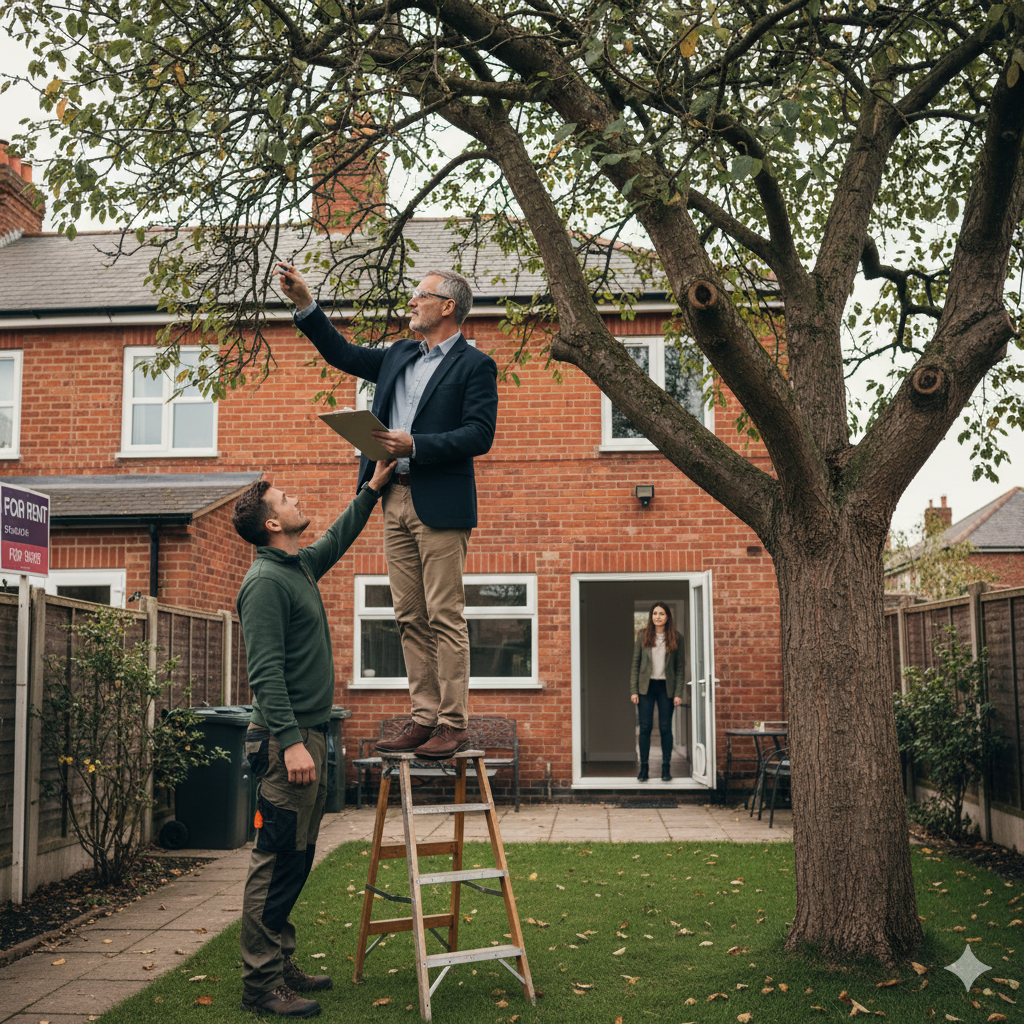
Before a single branch is cut, a reputable team will conduct a site risk assessment. In the UK, this is a legal requirement under health and safety regulations. The lead arborist will check for:
-
Overhead Utility Lines: Identifying power cables or phone lines.
-
Ground Hazards: Locating glass greenhouses, sheds, or underground services.
-
Wildlife Checks: Ensuring there are no active bird nests or bat roosts (protected under the Wildlife and Countryside Act).
2. Setting Up the “Drop Zone”
Safety is the priority during any professional tree surgery visit. The team will cordoning off the work area using cones or “Men at Work” signs. This is particularly important for properties with public footpaths or shared driveways. They will also lay down heavy-duty mats if they need to move heavy machinery across your lawn to prevent soil compaction and turf damage.
3. The Ascent: Getting into the Canopy
Depending on the size of the tree and its location, the tree surgeon will use one of two methods:
-
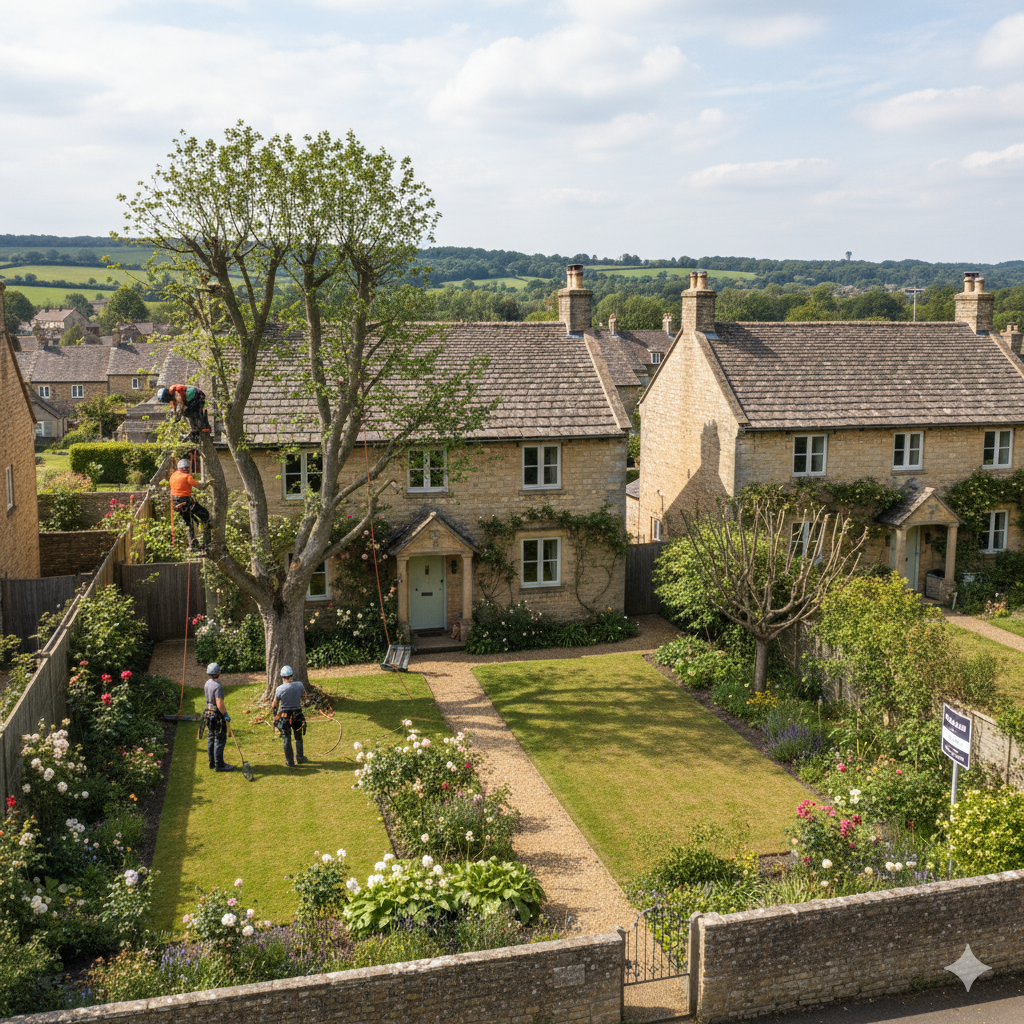
Rope and Harness: Most common in residential UK gardens. The climber uses specialized knots and pulleys to move through the canopy with minimal impact on the tree.
-
MEWP (Cherry Picker): If a tree is considered too unstable to climb, a Mobile Elevated Work Platform is used to reach the outer branches safely.
4. The Main Surgery Work
Once in position, the arborist performs the specific tasks agreed upon in your quote. Common techniques include:
-
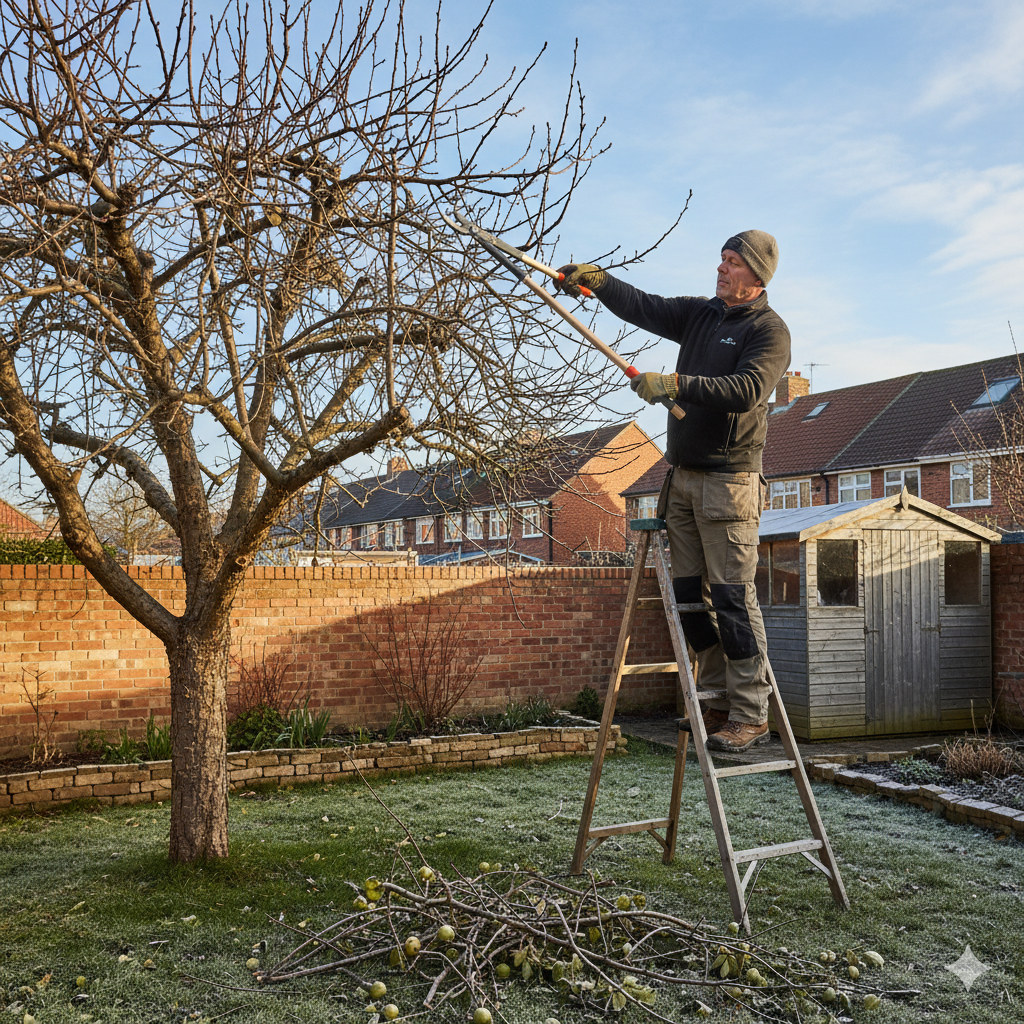
Crown Thinning: Removing a percentage of smaller branches to let light through and reduce wind resistance.
-
Crown Reduction: Shortening the height and spread of the tree to manage its size.
-
Deadwooding: Removing brittle, dead branches that could fall and cause injury.
During a professional tree surgery visit, all cuts are made using “target pruning” techniques. This involves cutting just outside the “branch collar” to allow the tree to heal naturally without leaving “stubs” that invite rot.
5. Ground Operations and Waste Management
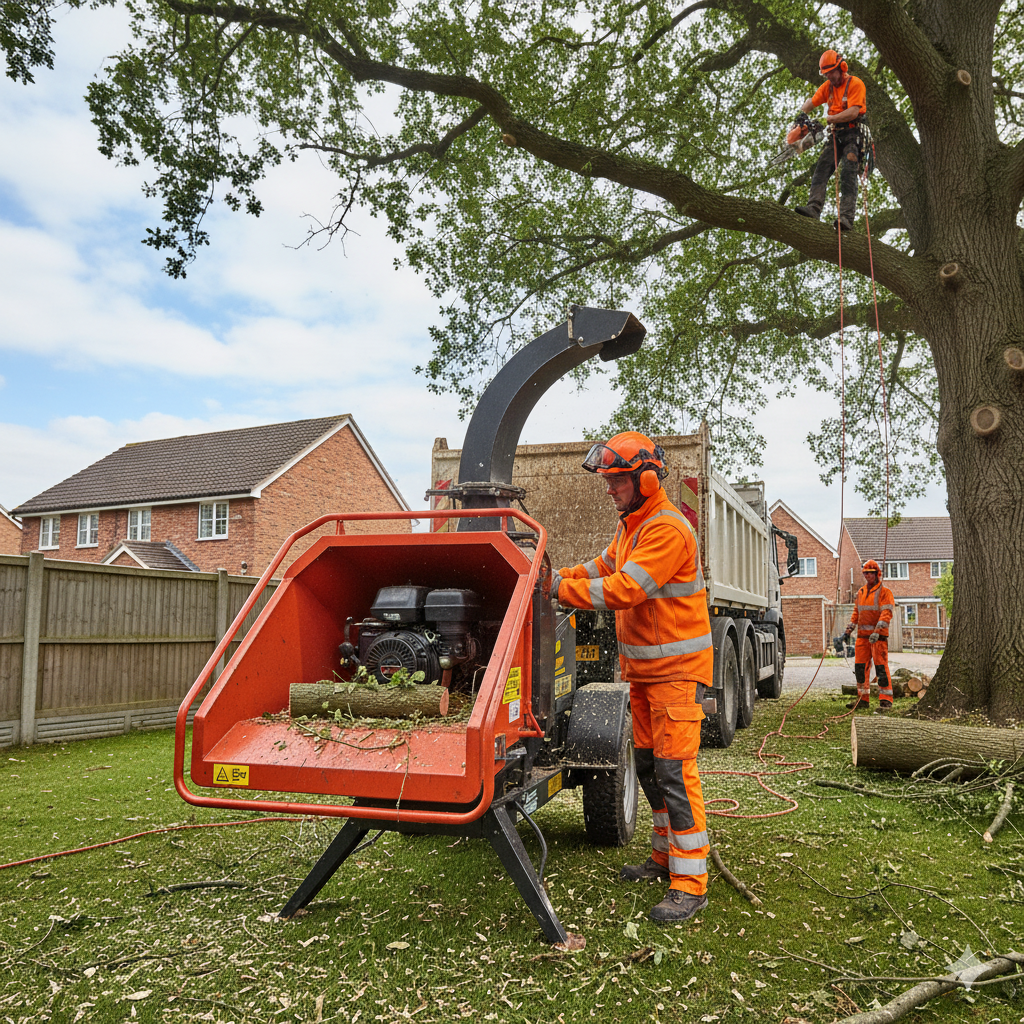
As the climber cuts, the ground crew (the “Groundies”) are the unsung heroes. They use “lowering lines” to guide heavy timber safely to the ground, avoiding your flowerbeds.
All arisings—the branches and logs—are then processed:
-
Woodchipping: Smaller branches go through a drum chipper, turning them into mulch.
-
Logging: Larger trunk sections are often cut into manageable rings. You can usually ask the team to leave these for your log burner, or they can haul them away.
6. The “Golden Leaf” Clean-Up
A hallmark of a high-quality professional tree surgery visit is the clean-up. A professional team won’t just leave a pile of sawdust. They will use leaf blowers and rakes to ensure your garden, driveway, and even your neighbour’s patio are cleaner than when they arrived.
7. Final Inspection and Sign-Off
Before leaving, the lead arborist will walk you through the work. They will explain why certain cuts were made and provide advice on the future health of the tree. This is your chance to ask questions about maintenance or potential “regrowth” timelines.
Checklist: What to Ask Before the Visit
| Question | Why it Matters |
| Are you insured? | Ensures you aren’t liable for accidents. |
| Are you NPTC qualified? | Confirms they have the technical training to use chainsaws. |
| Do you work to BS3998? | This is the British Standard for tree work quality. |
| Is the waste removal included? | Avoids surprise costs for tipping fees. |
Summary
A professional tree surgery visit is a highly coordinated operation that blends heavy machinery with delicate botanical knowledge. By hiring a qualified professional, you aren’t just cutting a tree; you are investing in the safety and longevity of your landscape.