The General Rule of Thumb: Winter Dormancy
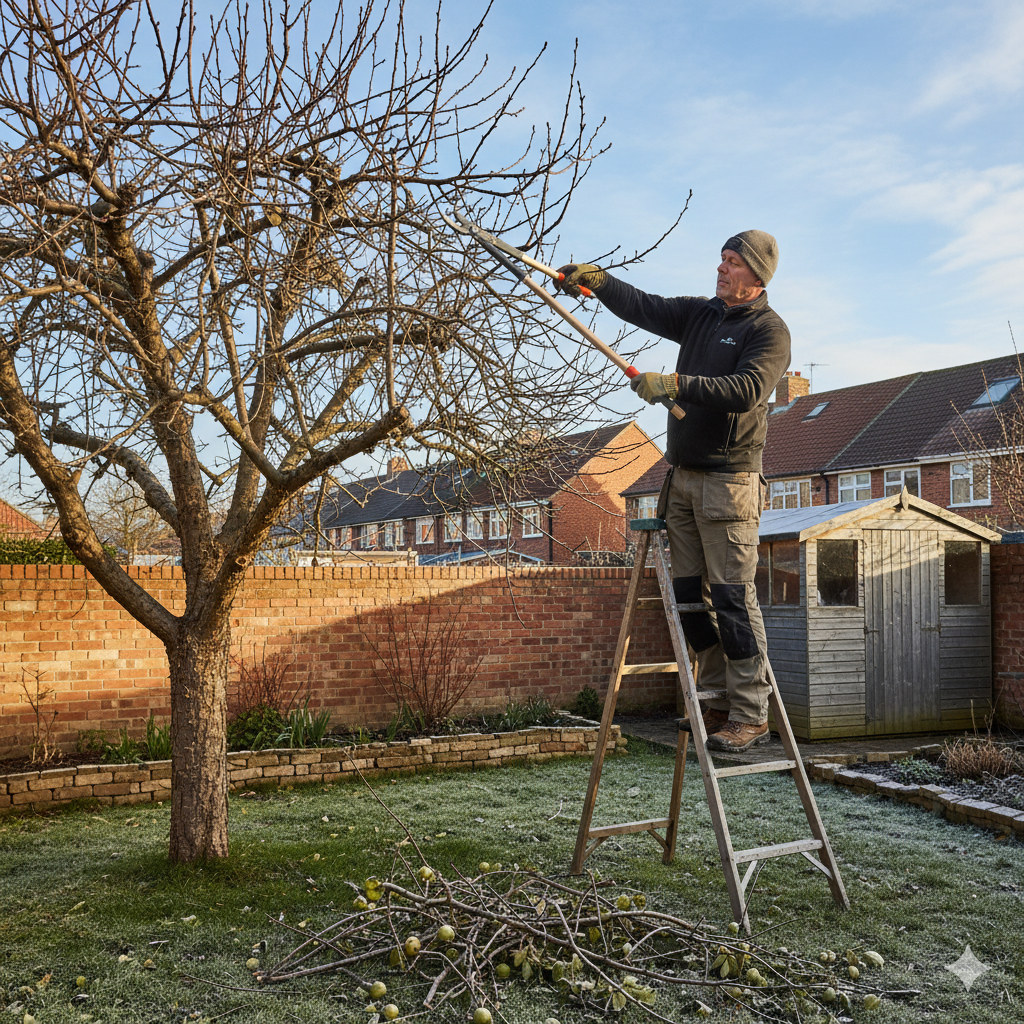
For the vast majority of deciduous trees in the UK, the gold standard for pruning is mid-to-late winter (November to early March).
During this period, trees are dormant. Since the leaves have fallen, the “skeleton” of the tree is visible, making it far easier to identify crossing branches or diseased wood. More importantly, the sap isn’t flowing, which reduces the risk of “bleeding” and prevents the spread of fungal infections that are more active in warmer months.
Exceptions to the Rule
While winter is generally best, there are three major exceptions you must keep in mind:
-
Stone Fruits: Trees like plums, cherries, and apricots should never be pruned in winter. This is to avoid Silver Leaf disease, a fungal infection that enters through pruning cuts during damp, cold weather.
-
Sap-Bleeders: Maples (Acer) and Birches (Betula) bleed heavily if pruned in late winter. These are best tackled in late autumn or early winter before the sap starts rising.
-
Spring Bloomers: If a tree flowers in early spring (like certain Magnolias), pruning in winter will remove the flower buds. Wait until immediately after they have finished flowering.
Pruning by Tree Type
| Tree Type | Best Time to Prune | Why? |
| Deciduous (Oak, Beech, Ash) | Nov – Feb | Dormancy allows for structural shaping without stress. |
| Fruit Trees (Apple & Pear) | Dec – Feb | Encourages a productive crop for the coming summer. |
| Stone Fruits (Plum, Cherry) | May – August | Minimises the risk of Silver Leaf disease and Bacterial Canker. |
| Evergreens (Holly, Yew) | Late Summer | Allows new growth to harden off before the first frosts. |
| Conifers | April – August | Avoid pruning in winter as they struggle to recover in the cold. |
Seasonal Guide to Pruning in the UK
Winter (December – February)
This is the peak season for formative pruning. Focus on the “Three Ds”: Dead, Damaged, and Diseased wood. For apple and pear trees, this is the window to thin out the canopy to ensure light and air can reach the centre of the tree, which prevents scab and rot.
Spring (March – May)
As the garden wakes up, focus on tender evergreens once the risk of hard frost has passed. If you have a specimen that was hit by winter frost, wait until May to see where the new buds break before cutting back the dead wood.
Summer (June – August)
Summer pruning is primarily about restricting growth. If your fruit trees are growing too vigorously, a summer snip redirects the tree’s energy from making leaves to developing fruit buds for next year. This is also the only safe window for your plums and cherries.
Autumn (September – November)
Generally, this is a time to put the secateurs away. Pruning in early autumn can encourage a flush of new, tender growth that will be instantly killed by the first frosts. The exception, as mentioned, is the Birch and Maple families.
Essential Pruning Tips for Success
-
Use Sharp Tools: Ensure your bypass secateurs and loppers are sharp. A clean cut heals much faster than a jagged tear.
-
The 25% Rule: Never remove more than a quarter of a tree’s canopy in a single season. Over-pruning stresses the tree and can lead to “water sprouts”—thin, weak shoots that ruin the tree’s shape.
-
Angle Your Cuts: Always cut at a slight outward-facing angle, about 5mm above a bud. This ensures rainwater runs off the cut rather than sitting on the bud and causing rot.
-
Check for Wildlife: In the UK, it is an offence under the Wildlife and Countryside Act 1981 to damage or destroy a bird’s nest while it is in use. Always check for nesting birds if pruning between March and August.
Summary
Pruning doesn’t have to be daunting. By following the natural lifecycle of your trees and keeping your tools sharp, you can maintain a healthy, beautiful garden year-round. If you aren’t sure of the species of your tree, it is always safest to wait until mid-winter or consult a local arborist.